
How the Darknet works in Bruisers 2D Boxing: buying dope, gear and services off the books, what it costs, and how the risk lands on your fighter.
The Darknet: Drugs, Deals and Washed Gear
How the Darknet works in Bruisers 2D Boxing: buying dope, gear and services off the books, what it costs, and how the risk lands on your fighter. Source: Bruisers 2D Boxing on Steam
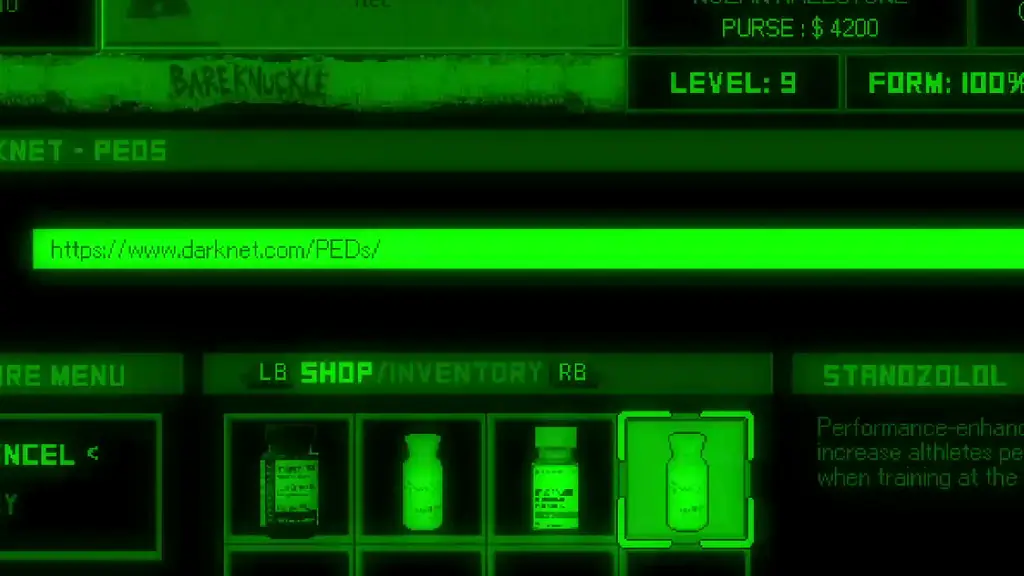
The Darknet is the in-game black market. It is not a browser and it is not a cheat menu; it is a directory of dealers, fixers and grey-market suppliers that opens up as your career gets serious.
The game's own trailer sells the pitch: train, eat, fight, dope, and deal with anyone who wants a piece of you. The Darknet is where most of that happens off the books.
What is on the Darknet
Three categories of thing, broadly:
- Performance aids. Substances that push recovery, conditioning or output beyond what training gives you.
- Medical shortcuts. Faster healing than the clinic offers, at a price and with less oversight.
- Gear and favours. Equipment that is not on the official store, and the occasional service that solves a problem you would rather not solve publicly.
Prices are higher than the legitimate equivalents and the transactions are not tracked in the same way. That is the entire value proposition, and the entire risk.
How the risk works
Doping is a mechanic, not a free buff. The things to watch:
- Testing. A positive test costs you a suspension, a purse, or a licence depending on where you are in the career.
- Vitals. Substances move the vitals the corner card shows. A shortcut that raises conditioning can cost recovery, and the bill shows up in rounds five to eight.
- Reputation. Getting caught changes how promoters and opponents treat you. Some doors close; a few open.
The safe pattern, if you are going to use it at all: use it in the amateur and low-level pro phase where the oversight is thin, and get clean before you reach title contention.
Is the Darknet worth using?
For a first career, mostly no. The training system already produces a fighter good enough to win, and the downside of a positive test is a run-ending setback in a game where careers are short.
For a challenge run, yes — a chemically enhanced fighter with a short window is a legitimate and interesting way to play. The game does not moralise; it prices the choice and lets you live with it.
The Darknet and the mob
The two systems touch. Darknet contacts can introduce you to people who want favours rather than money, and refusing is not always an option once you have taken the first deal.
If you want to keep the option of a clean career, do not take the favours. If you want the mob storyline, the favours are the door.
What it is not
- Not a cheat console. There is no developer console in the retail build.
- Not Steam Workshop. There is no mod support on the store page at launch.
- Not a shortcut past training. It buys you time, not skill; the punches still have to land.
Players searching for a "dark net" cheat are usually looking for the in-game market. That market is real, and it is documented above.
Practical rules
- Read the vitals panel after every purchase. The cost is always visible somewhere.
- Never buy before a title fight. The test risk is highest when the stakes are highest.
- Keep a cash reserve. Darknet prices spike when you are desperate, and the game knows when you are.
- Decide the storyline before you take the first deal. Half-committed is the worst of both branches.
For the substances themselves, read doping, vitals and recovery. For the people behind the market, see mob, debts and fixed fights.
When the dark net is actually worth it
The dark net is a gamble with a clear shape: you pay money now for a chance at an advantage, and the chance is not the same for every purchase.
Dope before a step-up fight. This is the classic use. A single cycle before a fight you are expected to lose can flip the result and change your ranking. The risk is a test, and tests are more likely after a win over a ranked opponent.
Gear before a title fight. Gear is the safer purchase because the downside is financial rather than disciplinary. If the purse is large enough to absorb the cost, it is close to free value.
Nothing before a routine defence. Spending on a fight you win anyway is how careers end up in debt.
The rule of thumb: buy when the fight changes your trajectory, skip when it only changes the scorecard. And never buy on credit from the mob to cover a dark net purchase, because that is how the enforcement storyline starts.
FAQ
What can you buy on the dark net?
Dope, gear and favours. Each has a cost beyond money — testing risk, vitals damage or obligations.
Is the dark net the same as the real dark web?
No. It is an in-game market; there is no cheat or crack behind it.
Do purchases get discovered?
Positive tests and mob obligations surface in the news feed and change your endings.
Sources
More Bruisers 2D Boxing Guides
How the clinch works in Bruisers 2D Boxing: tie-ups, clinch punching, referee breaks, headbutt disqualifications and the in-fighting stance.
Whether Bruisers 2D Boxing is coming to PS5, Xbox or Nintendo Switch, what the store page says, and how likely a console port really is.
How the controls work in Bruisers 2D Boxing: moving, punching high and low, slipping, parrying, clinching and the corner mini-game inputs.
A guide to the between-round corner in Bruisers 2D Boxing: swelling drain, cut repair, tool switching, pressure and how to stop a fight being stopped on you.
How defence works in Bruisers 2D Boxing: slipping, parrying, head movement, catching and shooting, and the reads that turn defence into offence.
What doping does to your fighter in Bruisers 2D Boxing, how the vitals panel reads, heart damage, and why a chemically enhanced career is a risk decision.
How the Bruisers 2D Boxing roster works: named opponents, records, divisions, and how to scout a fighter before you sign the contract.
How to play career mode in Bruisers 2D Boxing: building a fighter, booking fights, training camps and making weight.