
How aging works in Bruisers 2D Boxing: stat decline, retirement timing, career endings and how to plan your last fights.
Age, Decline and Knowing When to Retire
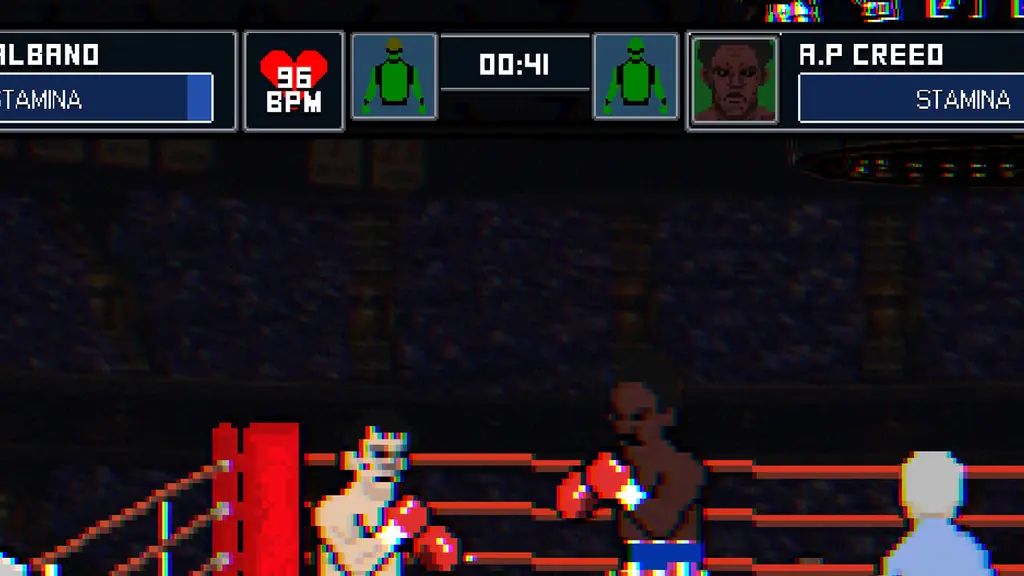
How aging works in Bruisers 2D Boxing: stat decline, retirement timing, career endings and how to plan your last fights. Source: Bruisers 2D Boxing on Steam
The fight card shows your fighter's age from the first bout. It is not decoration. Every career in Bruisers has a peak, a plateau and a decline, and the game is designed so that most players meet the decline unprepared.
What age changes
The effects are cumulative rather than a single cliff:
- Recovery slows. Between rounds and between fights, damage clears more slowly.
- Conditioning is harder to hold. The same camp produces less than it did at twenty-five.
- Damage sticks. Old injuries reopen, and a cut that healed cleanly at the start of a career becomes a permanent problem.
- Experience helps. Timing and reads do not decline, which is why an older technician can still beat a younger brawler.
That last point is the whole strategy of a long career: replace physical advantages with knowledge before the physical ones leave.
The signs of decline
Watch for these before the game tells you:
- Stamina emptying earlier in fights than it did a year ago.
- Cuts reopening in the same place every fight.
- Hands taking longer to heal after camp.
- Rounds you used to win on work becoming rounds you lose on the cards.
Two of those at once means you are in the decline. Three means you are one bad fight from the end.
Planning a retirement
Retiring on your own terms is an achievement in itself, and it is worth more than one more payday in a career you cannot win.
The plan:
- Set a target. A title, a specific rival, a purse figure. Retire when you hit it.
- Protect the record. A 28-3 career that ends at the right time reads better than 30-9 with three losses at the end.
- Bank the money. Retirement income depends on what you saved, not what you earned.
- Leave one fight in the tank. The last fight should be one you can win.
Forced retirement
The game will end a career for you if the damage gets bad enough. A doctor stoppage, a licence revocation or a serious injury can close the run without warning.
The way to avoid it is the boring way: refuse fights when your medicals are bad, take the recovery weeks, and do not chase a belt with a broken hand.
The second career
Some endings let you stay in the sport — training, promoting, or managing. Those endings are usually gated on reputation and money rather than record, which is another reason to keep both intact.
If you are chasing a specific ending, decide which one before the last three fights and spend the remaining career building toward it. See endings and achievements for the list.
A retirement checklist
- Is the record worth protecting? If yes, stop taking short-notice fights.
- Is there a belt you can realistically win in two fights? If yes, take them.
- Are your medicals clean? If not, take the weeks.
- Do you have enough banked to stop? If not, one more payday, then stop.
Bruisers rewards the player who treats a career as a story with an ending rather than an endless ladder. The fighters who go out on top are the ones who decided when.
For the damage mechanics behind the decline, read injuries and recovery. For the record and the rankings, see rivals and the news feed.
How decline actually shows up
Aging is not a single stat going down. It appears in three places, and each one changes how you have to fight.
Recovery between rounds. The first thing you will notice is that the corner mini-game stops being enough. Damage that used to clear by round four stays.
Hand speed. Punches that used to beat an opponent to the spot start arriving second. Counters you drilled for twenty fights stop landing.
Chin. The same shot that you walked through at 28 puts you down at 34. If your style is Bully pressure, this is the stat that ends your career.
The practical consequence is that a late-career fighter should be more economical: fewer exchanges, more clinching, more body work, more reliance on the corner. A Slick fighter ages better than a Bully because the style depends on reading rather than absorbing.
Retirement timing matters for the ending. Going out after a title defence reads differently from going out after three losses on the undercard, and the game remembers which one you chose.
FAQ
When should you retire?
Before the decline costs you a fight you would have won. The game does not force retirement at a fixed age.
Does age affect all styles equally?
No. Slick fighters age better because the style relies on reading rather than absorbing damage.
Can you come back after retiring?
Retirement ends the career and produces an ending; there is no un-retire in the current build.
Sources
More Bruisers 2D Boxing Guides
Whether Bruisers 2D Boxing is coming to PS5, Xbox or Nintendo Switch, what the store page says, and how likely a console port really is.
How the controls work in Bruisers 2D Boxing: moving, punching high and low, slipping, parrying, clinching and the corner mini-game inputs.
A guide to the between-round corner in Bruisers 2D Boxing: swelling drain, cut repair, tool switching, pressure and how to stop a fight being stopped on you.
How the Darknet works in Bruisers 2D Boxing: buying dope, gear and services off the books, what it costs, and how the risk lands on your fighter.
How defence works in Bruisers 2D Boxing: slipping, parrying, head movement, catching and shooting, and the reads that turn defence into offence.
What doping does to your fighter in Bruisers 2D Boxing, how the vitals panel reads, heart damage, and why a chemically enhanced career is a risk decision.
How the Bruisers 2D Boxing roster works: named opponents, records, divisions, and how to scout a fighter before you sign the contract.
How to play career mode in Bruisers 2D Boxing: building a fighter, booking fights, training camps and making weight.